 Dr Daniel Polak joins the Oliver group following PhD studies with Dr Jenny Clark at the University of Sheffield. In his PhD, Daniel studied singlet fission of polyenes inside de novo maquette proteins and the effect of microcavities on the emission efficiency of singlet fission. Daniel will use multidimensional optical spectroscopies to explore chemical and biomolecular condensed phase dynamics.
29th International Conference on Photochemistry

Victoria Taylor, Giordano Amoruso, Mahima Sneha (Orr-Ewing group) and Luke Lewis-Borrell (Orr-Ewing group) presented their ultrafast studies at the 29th International Conference on Photochemistry in Boulder, Colorado, USA. Tom Oliver co-chaired and organised the Ultrafast Photochemistry session of the conference with Vanessa Huxter (University of Arizona).
Welcome to Una Tobin
 Welcome to Chemical Physics undergraduate student Una Tobin who has joined the Oliver group this week as a summer project student. Una will also work in the lab for her final year Masters project this Autumn.
Giordano’s bimolecular excited state proton transfer accepted in JPCB
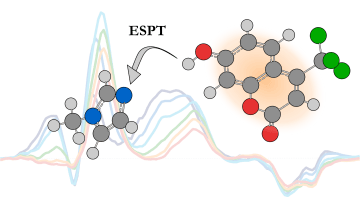 Giordano’s study of an biomimetic excited state proton transfer (ESPT) reaction “Following Bimolecular Excited State Proton Transfer between Hydroxycoumarin and Imidazole Derivatives” has been accepted for publication in the Journal of Physical Chemistry B. The paper details the immediate ESPT dynamics across a hydrogen bonded bridge between coumarin photoacid and imidazole base molecules in chloroform solution. Due to the short excited state lifetime of the photoacid, the immediate ‘contact’ ESPT reaction can be studied in isolation of diffusive driven ESPT dynamics. The paper is available online here and forms Tom’s contribution to the Journal of Physical Chemistry’s Young Scientists Virtual Special Issue.
Marta’s dinucleotide paper accepted!
 Marta’s paper entitled, Exploring ultraviolet photoinduced charge-transfer dynamics in a model dinucleotide of guanine and thymine, has been accepted for publication in Physical Chemistry Chemical Physics. The paper, unequivocally demonstrates that the Franck-Condon excited states of the dinculeotide, d(GpT), are significantly delocalised across both nucleobases, and mediate d(G+pT–) exciplex product formation on an ultrafast (< 350 fs) timescale. Theoretical studies show that the nature of the vertical excited states are very dependent on the specific geometry of the dinucleotide, and dictate the degree of delocalised, charge-transfer or localised character. The paper is available to read here.
Postdoctoral Research Fellow Position: Multidimensional Optical Spectroscopic Studies of Ultrafast Non-Radiative Molecular Relaxation Dynamics
Applications are invited for an EU FET-OPEN funded postdoctoral research fellow with Dr. Tom Oliver in the Laser Chemistry, Spectroscopy and Dynamics Group at Bristol. The project will involve collaboration with a variety of scientists from different disciplines in 7 other institutions across Europe. The appointee will use state-of-the-art multidimensional optical spectroscopies such as two-dimensional electronic and two-dimensional electronic-vibrational spectroscopy to study the condensed phase non-radiative relaxation dynamics of a variety of molecular systems, including molecules that display good ‘photon to heat’ conversion properties, such as specially synthesised diketopyrrolopyrroles or sinapoyl malate derivatives.
Applicants should have, or be about to graduate with, a Ph.D. in Chemistry, Chemical Physics, or a related discipline. Candidates should have proven experience with at least some of the following: femtosecond lasers, non-linear optics, optical parametric amplifiers, condensed phase dynamics.
This 2.5 year position is available from 1st April 2019.
The application deadline is 4th March 2019.
Informal enquiries should be address to tom.oliver@bristol.ac.uk
Further details about the position and application procedure are available here.
Angewandte Chemie paper accepted!
 Collaborative work with Carmen Galan’s group has just been published in Angewandte Chemie. The paper details the synthesis of a stiff-stillbene ligand which induces conformational unfolding of G-quadruplex. Upon 400 nm irradiation this effect can be reversed via photooxidation of the ligand. Remarkably, the conformation of G4 DNA was switched 5 times.
Tom Swift awarded EPSRC doctoral prize
 Tom Swift has been awarded one of the University of Bristol’s prestigious EPSRC doctoral prize fellowships to work in the Oliver group. The prize provides 2 years of post-doctoral research funding for Tom to pursue “Understanding the Achilles’ heel of photosynthesis to improve global crop yields”.
Fabiola and Teo start their PhDs
BCFN students Fabiola Cardoso Delgado and Teo Garcia Millan are continuing for their PhD studies in the Oliver group after 6 month extended projects. Fabiola and Teo are jointly supervised by Dr. Heather Whitney and Prof. Carmen Galan, respectively.
EPSRC Early Career Equipment Grant Funded
EPSRC have funded an early career equipment grant application that will benefit many ECRs at the University of Bristol, including the Oliver group.
The funding will be used for the purchase of an ultrafast mid-infrared detector system for use in multidimensional optical spectroscopic measurements.
 The Oliver Research Group