Congratulations to first year PhD student Giordano Amoruso who won a poster prize at the Royal Society of Chemistry’s Spectroscopy and Dynamics group meeting held at Durham University. Giordano’s poster described his very recent results detailing the excited state proton transfer in a model chemical system.
Review Paper Accepted
Tom’s invited review article, “Recent Advances in Multidimensional Ultrafast Spectroscopy”, has been accepted for publication in a forthcoming issue of Royal Society Open Science. The paper details the recent innovations in extreme cross-peak spectroscopies, action spectroscopies such as phase-modulated fluorescence or photocurrent 2D spectroscopy, 2D Raman and 2D THz spectroscopies.
Royal Society Enhancement Award Sucess
 Tom has been successful in securing an University Research Fellow Enhancement Award from the Royal Society. The award of £100K will be transformative to the group, giving us funds to buy essential pieces of apparatus that will enable us to further our exploration of charge and energy transport mechanisms in nanomaterials and biomolecules.
First Data from Oliver Lab
Laboratory renovations to our laboratory were completed in April 2017, with laser installation in May 2017. We took our first (publishable) data in November 2017, down to the immense efforts of Aditi and Marta. A selection of images showing the laboratory in various stages of refurbishment, and the TA experimental apparatus are shown below.


Congratulations Marta!
Well done to Marta Duchi for passing her Italian Esame di Stato exam. This now means Marta is now abilitata, and that she is officially recognised as a professional chemist!
Faraday Discussion 2019
A Faraday Discussion focused on exploring ‘Ultrafast Photoinduced Energy and Charge Transfer’ has finally been confirmed for 8-10 April 2019 in Ventura, California. The four main themes of the meeting are: Energy and charge transport in natural photosynthesis, photovoltaics and bio-inspired light harvesting, photo-induced electron transfer, photo-protection/photo-damage in natural systems.
Details of the opening and closing lectures, and invited speakers will be available shortly, and found on the RSC website.
Victoria speaks as part of semiconductor symposium
PhD student Victoria Taylor presented her 2DIR studies of formadinium lead iodide perovskite at a semi-conductor mini-symposium, organised by the Bristol Centre for Functional Nanomaterials.
Welcome Giordano
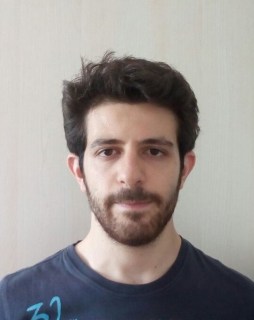
Welcome to Giordano Amoruso who joins the Oliver group as a new PhD student. Giordano recently completed his Master’s degree at the University of Padua. At Padua, Giordano worked in the laboratory of Dr Elisabetta Collini using 2D electronic spectroscopy to investigate the ultrafast dynamics of quantum dots.
Summer Conferences
It has been a busy summer for the Oliver group with multiple contributions to several symposia and conferences covering a wide range of topics. Victoria and Tom both presented at INASCON 2017, an international student led nanoscience conference. Marta and Victoria presented their research at the Southern Universities Spectroscopy and Dynamics Group Meeting. Marta detailed her work investigating charge transfer between a model dinucleotide of guanine and thymine using time-resolved infrared spectroscopy, and Victoria presented her 2DIR studies of lead-halide perovskite thin films. Marta also presented and attended the RSC’s Photochemistry Group Meeting in Birmingham. Finally Aditi will be presenting some of her transient X-ray absorption measurements from her work at UC Berkeley and LBNL as part of the Emerging Techniques in Chemical Dynamics Mini-Symposium.
Welcome to Dr. Aditi Bhattacherjee
 We are happy to welcome Dr. Aditi Bhattacherjee to the Oliver group. Aditi received her PhD from the Tata Institute for Fundamental Research (Mumbai) in 2014, before postdoctoral research with Prof. Steve Leone at UC Berkeley. In the Leone group, Aditi used pioneering extreme-UV and X-ray transient spectroscopies to study photoinitiated non-adiabatic dynamics, including studies of an electrocyclic ring opening reaction (published in Science) and the transition state dynamics of C-I bond fission in allyl iodide. Aditi will be working on multidimensional optical spectroscopies to investigate electronic and vibrational couplings in biological and molecular systems.
 The Oliver Research Group